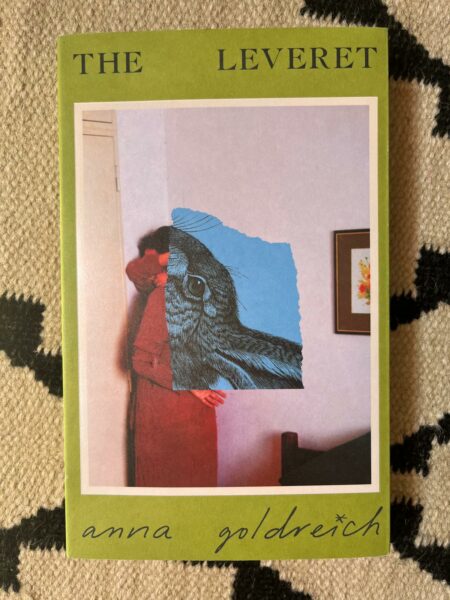
Clare and Phoebe have lost their baby daughter to a late miscarriage and have withdrawn to Phoebe’s family farm in an attempt to start something new, and to live alongside an agonising absence that cannot yet be made meaningful.
When Clare finds a leveret in the woods, she cares for it with an intensity that is tender, visceral and disturbing. Isla – as she is named – becomes a companion in Clare’s acute loneliness, but also a conduit for all the love and nurture that has nowhere else to go. Goldreich does not offer this as a device for ‘recovery’ – just as my reading of ‘H is for Hawk’ didn’t use a goshawk similarly – and nor does she reduce Clare’s absorption, and depression, to a symptom of unhealthy grief.
The exquisite, lyrical text deftly re-iterates the complexities of bereavement after late pregnancy loss: the lingering bodily knowledge of pregnancy (breasts filling with milk for no baby, the stretch marks), the persistence of imagined futures (‘we came up with names and imagined the kind of person she would be’) as well as the strain placed on a relationship when each grieve differently. Goldreich rightly refuses to tidy away the particularity of baby loss, or to separate this from queer love, embodiment and desire. I read this in one fell swoop, 24 years on from losing my first two babies to a late miscarriage. I wish I had had this extraordinary book to read back then.